Projects Section 🗁
⚠ NB!!! This section looks better when viewed on a PC or using "Desktop site".

| Contents |
|---|
Population Stats
Last edited March 2025
Interactive map- countries and their respective populations(2023)
Some interesting population facts
- India surpassed China's population in 2022, becoming the most populated country in the world as of 2024.
- As of 2024, 281 million people live outside their borders.
- The United States has the highest immigrant population, with over 50 million in 2024, which amounts to 15.2% of the population. It is followed by Germany with 16+ million, Saudi Arabia with 13 million, and the United Kingdom with 11 million. South Africa, on the other hand, has 2.6 million, amounting to 4.1%, and is the most immigrated African country.
- As of 2024, the male-to-female ratio is 50.4:49.6
- Meanwhile, as of 2024, countries with the highest number of emigrants are India(17.5 million), Mexico(11.7 million), China(10.7 million), and Russia (10.4+ million). South Africa has 800 thousand.
- Monaco is the most highly dense country with 25411.4 people per square kilometer as of 2024, Iceland is the lowest with 3.67 people per square kilometer.
- Asia contains about 60% of the earth's population.
- Nigeria is the most populated country in Africa by a wide margin, followed by Ethiopia, then Egypt.
- In South Africa, more than half the population(35.8 million) live in 3 provinces.
- The world reached 1 billion population for the first time in the early 1800s, and in 2022, about 200 years later, we reached 8 billion. It took only 12 years to go from 7 to 8 billion, and it is estimated by the United Nations that it will take another 15 years to reach 9 billion, due to the declining population growth rates.
- The population is expected to be 10.4 billion in 2080-2100 according to the United Nations.
Some pandemics that have caused the largest number of deaths in history.
- Black death(1334-1353), 75 to 200 million.
- Influenza(1918-1920), 17-100 million.
- New world small pox(1520-1600s),25-55 million.
- Plague of Justinian(541-549), 15-100 million.
- HIV/AIDS(1981-present), 27-48 million.
- Covid 19(2020-present), 5-18 million.
- The third plague(1855-1959), 5-15 million.
The population of our prey, poultry, includes chickens, turkeys, Muscovy ducks, mallard ducks, and some other domesticated birds, with the purpose of harvesting animal products.
Data sources
- https://data.worldbank.org/indicator/
- https://ourworldindata.org/
- https://unric.org/
- https://www.gavi.org/vaccineswork/historys-seven-deadliest-plagues
Employment and unemployment South Africa
Employment and unemployment South Africa
Last edited July 2026Before we delve into the stats, here's a quick revision of important unemployment concepts. What is unemployment? There are many definitions of unemployment, but the simplest is that it occurs when people who are able and willing to work cannot find a job. There are 3 main types of unemployment :
- Cyclical unemployment: Happens during an economic downturn, when demand for goods and services is low, hence the demand for people who offer skills to produce said goods and services is also low, usually medium term (1-12 months)
- Structural unemployment: Happens when there is a mismatch for the skills employers are looking for and the skills the people who are looking for a job have to offer. It happens even when economic conditions are good and lasts long term (more than 12 months), as acquiring new skills takes time. The introduction of new technology can lead to this type of unemployment as it disrupts market dynamics.
- Frictional unemployment: Happens when people move between jobs or transition into and out of the labor force, or when recent grads enter the market. It helps achieve the efficient allocation of labor across the economy as businesses spend time filling the right candidate and individuals spend time finding the right job (short term, less than a month)
SA Unemployment rate over the years compared to other BRICS countries
South African Labour Force Survey 2026
Some insights regarding employment and unemployment from the Quarterly Labour Force Survey 2026 quarter 1, released on 12 May 2026 by Stats SA. For the full comprehensive report visit: https://www.statssa.gov.za/publications/P0211/P02111stQuarter2026.pdf.
The South African Labour Market Structure
(Hover on any of the subgroups below to see the formal definitions)-
Working Age Population (15-64)
42.2 million The working age population consists of all individuals aged 15 years and older who are considered capable of working regardless of their employment status.-
Labour Force
24.9 million The labour force comprises all persons who are employed, plus all persons who are unemployed.-
Employed
16.8 million Employed persons are those aged 15–64 years who, during the reference week, did any work for at least one hour, or had a job or business but were not at work (i.e. were temporarily absent). -
Unemployed
8.1 million Unemployed persons according to the Official definition are those (aged 15–64 years) who:
a) were not employed in reference week;
b) actively looked for work in past 4 weeks;
c) were available to start work; OR
d) have a future job starting at a definite date.
-
-
Outside the Labour Force
17.3 million Persons aged 15–64 years who are neither employed nor unemployed in the reference period.-
Potential Labour Force
4.9 million The potential labour force includes persons who are not in the labour force, but are either available for work but not actively seeking employment or actively seeking employment but not currently available to work.-
Available, not seeking Available potential job-seekers: Persons outside the labour force who did not carry out activities to seek employment but wanted employment and were currently available.
-
Not available but seeking Unavailable jobseekers: Persons outside the labour force who carried out activities to seek employment, were not currently available but would become available within a short subsequent period.
-
-
Others Outside the Labour Force
12.4 million Persons outside the labour force who do not fit into the Potential Labour Force category (e.g., full-time students, discouraged work-seekers who do not meet availability metrics, or those completely retired/unable to work).
-
-
Where are people employed?
Breaking down the unemployment rate by demographics
Below are the unemployment rates according to the level of education of individuals. From these, we can see the unemployment rates for graduates(including bachelor's degrees, honors, and above) and people with qualifications from other tertiary institutions are always lower than the national unemployment rate, while those with no matric or only matric are always above.
Types of unemployment
Below are the terms(with long term being a period of more than 1 year) and reasons for unemployment, as is evident, it is most difficult for people entering the job market for the first time additionally, more than 76% of unemployed people fall under long term unemployment, which supports the claim that the longer you stay unemployed, the more difficullt it is to find a job.
One Piece Stats
Last edited on March 2025
When you're arguing or debating any topic, whether it's politics, sports, anime/series, artists, etc., you need facts, evidence, and stats in order to prevail. Stats are essentially more powerful than the former simply because they often encapsulate the other two, plus the fact that in some cases it honestly doesn't even matter if the stats being presented are true or not, or whether they come from a credible source, bottom line is if you have stats of any kind, whatever point you're arguing will hold more weight to it vs when you don't(Check my essay on Statistical Misconceptions here). In this part of the section, I am going to pitch why One Piece is a really impressive piece of media, without focusing too much on the story or my anecdotal experience with it, but on the stats instead.
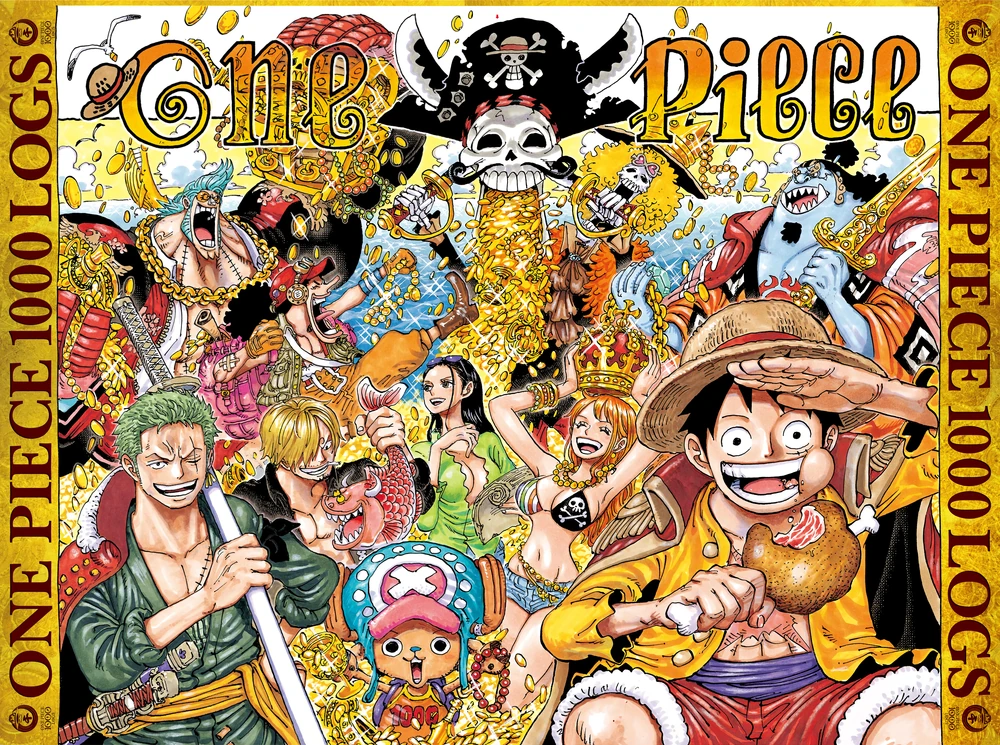
But first off, what is One Piece? apart from being my favorite show of all time, One Piece is originally a Japanese manga (graphic novel or comic) series written and illustrated by Eiichiro Oda or as we fans like to call him "Goda", it has been serialized in Shueisha 's shōnen manga magazine Weekly Shōnen Jump since July 1997, as of October 2024 it currently has a total of 109 volumes with a combination of 1128 chapters. One Piece also has an anime adaptation with 1122 episodes, which is how most people experience the story. It is one of the longest series ever, but unlike most shows of its length, there's a very good reason it is long, not limited to the vast world-building, hundreds of amazing characters, and the vast mysteries, so much so that there are people on YouTube who have made a career out of talking about One Piece alone. I've personally been following the story closely since 2014; anyone who knows me well enough knows just how much this story means to me.
One Piece sales volume sales spiked during 2010 and 2011, this was mostly because of the promotion and release of the first big One Piece movie, Strong world(2010), this was also around time the Marineford arc was airing in the anime, which is considered by many to be the greatest arc in the story and one of the greatest, if not the greatest arc in all of anime, this is when One Piece was at its prime, and there was no better time to become a fan.
One Piece is the highest-selling manga of all time with an approximate of 535 million copies sold. For reference Dragon ball Z, another titan of a manga franchise, is sitting at no. 5 with 260 million copies sold, and Naruto at no. 6 with 250 million, these aren't low numbers by any means, One Piece just gaps all its competition when it comes to manga sales.
In 2015 and 2022, One Piece set the Guinness World Record for "the most copies published for the same comic book series by a single author".
Eiichiro Oda, the creator of One Piece, is the no. 10th highest selling author of all time in terms of most copies sold, for reference no.1 is Shakespeare, Daniel Steel is no. 4, and J. K. Rowling, the author of Harry Potter is no. 8. This is particularly an amazing feat to me because Manga is still a relatively niche medium in the general public compared to novels.
One Piece is not only the highest-selling manga because of its length, it has been the best-selling manga for 18 years out of the 26 years it has been serialized. It was the best-selling manga every year (copies sold per year) for eleven consecutive years from 2008 to 2018. The streak was eventually broken by Demon Slayer in 2019. I remember being devastated back in 2019 when the news broke out. I was looking for every source, wishing it wasn't true.
The amount of One Piece chapters we get a year has been declining gradually, which is to be expected, considering the author has been writing and illustrating it for 26+ years, if anything, One Piece fans are generally happy when we see the author taking priority of his health and not overworking himself.
2020 and 2023 are the lowest of all, 2020 because of the COVID-19 pandemic and 2023 because the author was busy working with the live-action adaptation of One Piece.
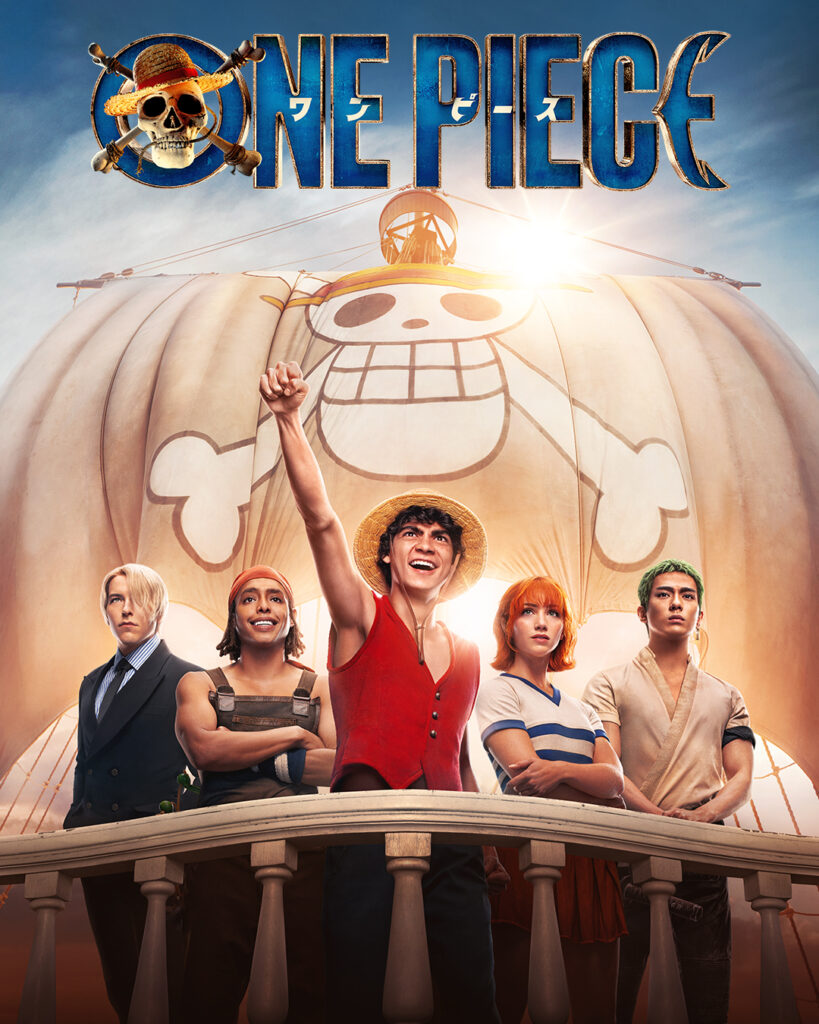
These are the numbers of visits to the One Piece page on Wikipedia, on August 2023 there was a massive spike, this without a doubt due to the release of the One Piece Live Action adaptation which was a huge success and the first successful live action anime adaptation, it was one of the most successful & highly rated shows on Netflix in 2023 (One Piece stays winning).
The live-action adaptation got many new people into the show and raised the overall interest in the One Piece franchise. It was honestly a great time to be a One Piece fan. I even had some family members discussing it with me, which was something I thought would never happen. Right now, I'm just hoping season 2 will be just as good.
The story of One Piece is divided into sagas, each saga focuses on its own different themes, conflicts, characters, and locations. It is an adventure story after all. You could think of a saga as like a season, but since One Piece is a weekly manga, we can't really use the season metric. Each saga also has its own arcs, which are essentially the storylines within each saga.
The Wano arc is the longest arc in the story. It started in July 2018, when I was in matric. I remember being very excited when it began, because I had been anticipating it since 2016. It ended in August 2022; I had a beard by the time it ended, which I find funny. Most people complain about how long recent arcs have become compared to the earlier arcs, a sentiment I can relate to however, I understand it's because the One Piece story and world is of a grater magnitude now, there are more characters, more mysteries and bigger conflicts that it would be impossible for everything to be resolved in a few chapters without making some bad writing choices.
The One Piece anime has a separate pacing problem of its own , usually an anime is shorter when you compare it to the number of chapters of the adapted manga, for example: HunterXHunter(2011) has 148 episodes adapting 339 chapters, Death Note has 37 episodes adapting 108 chapters, Naruto has about 427 cannon episodes adapting 700 chapters and so on...; the Wano arc in the anime however, has 191 episodes adapting 149 chapters, Whole cake arc is 95 adapting 78 chapters, and Dressrosa is 118 adapting 102 and so on. The point I'm trying to make being that the anime, especially with the recent arcs, doesn't promote the One Piece franchise as well as it should, there should be way fewer episodes and way better animation to attract new fans, but instead they stretch out (no pun intended) an already long series. Luckily, there's a new anime adaptation in the works by Netflix/Wit Studio, which will do the story justice, plus remastered versions of the current anime that are in the works as of 13 October 2024. But despite everything I have said, I still love the current One Piece anime adaptation, and I think it's a good way to experience the story in many ways. I just have higher standards when it comes to One Piece.
Sources
https://us.oricon-group.com/
https://www.animefillerlist.com/
https://www.imdb.com/list/ls522022697/
https://en.wikipedia.org/wiki/List_of_best-selling_fiction_authors
https://en.wikipedia.org/wiki/One_Piece
https://en.wikipedia.org/wiki/List_of_best-selling_comic_series
https://en.wikipedia.org/wiki/List_of_best-selling_manga
https://en.wikipedia.org/wiki/One_Piece_Film:_Strong_World